
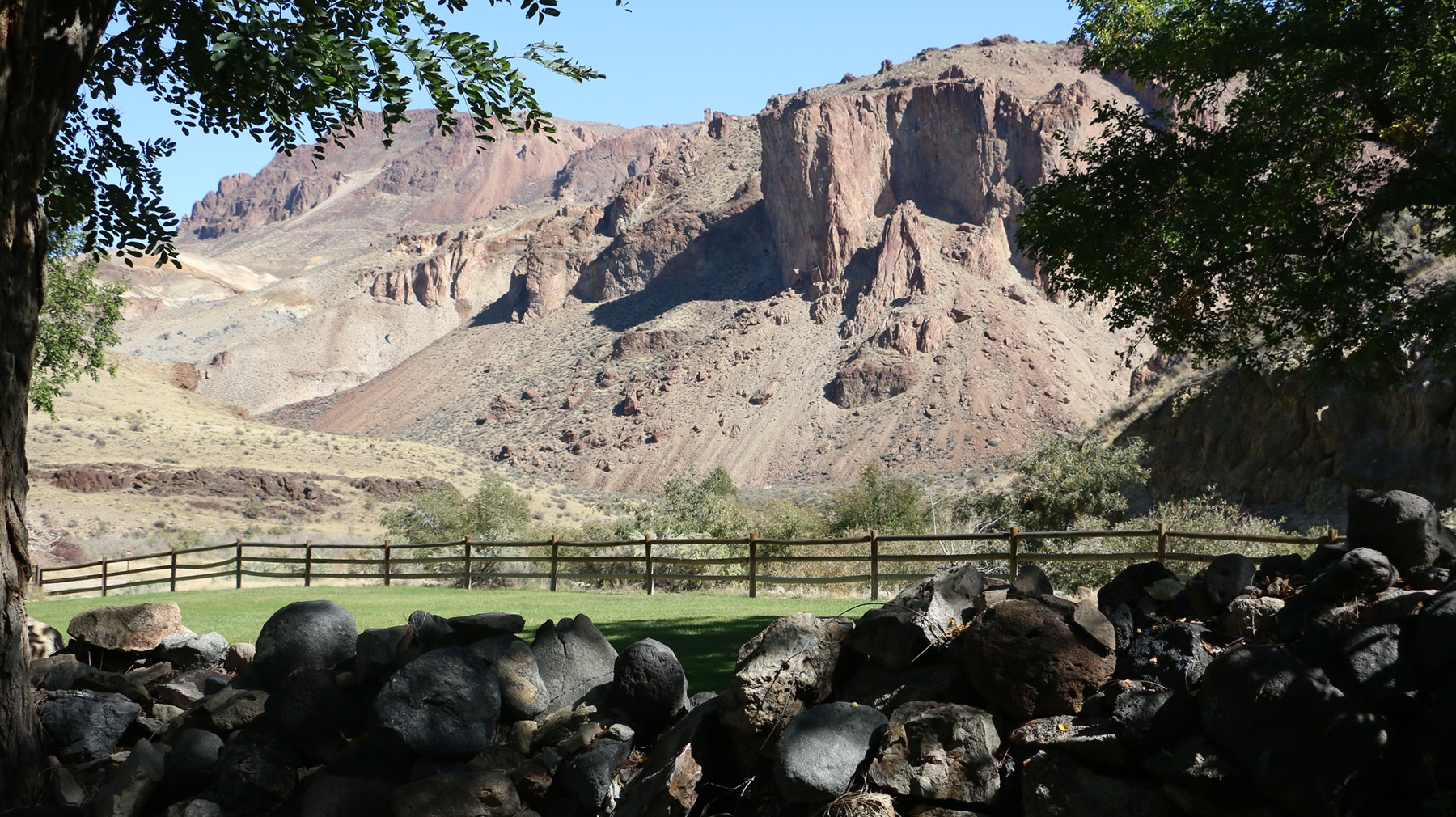
Some places announce themselves. Birch Creek hides. It sits at the bottom of a remote canyon on the Owyhee River, reached only by miles of unpaved road — which is exactly why the ones who make it down there never forget it.
If you've spent any time in the high desert of Malheur County, you know the landscape can run for miles in sagebrush and dust. Then the road drops toward the river, the canyon walls close in, cottonwoods appear, and suddenly there's a green oasis with a weathered wooden ranch standing in it — looking very much like it did a century ago. This is Birch Creek Historic Ranch, and this guide covers what it is, why it matters, how to actually get there, and how to build a trip around it.
What is Birch Creek Historic Ranch?
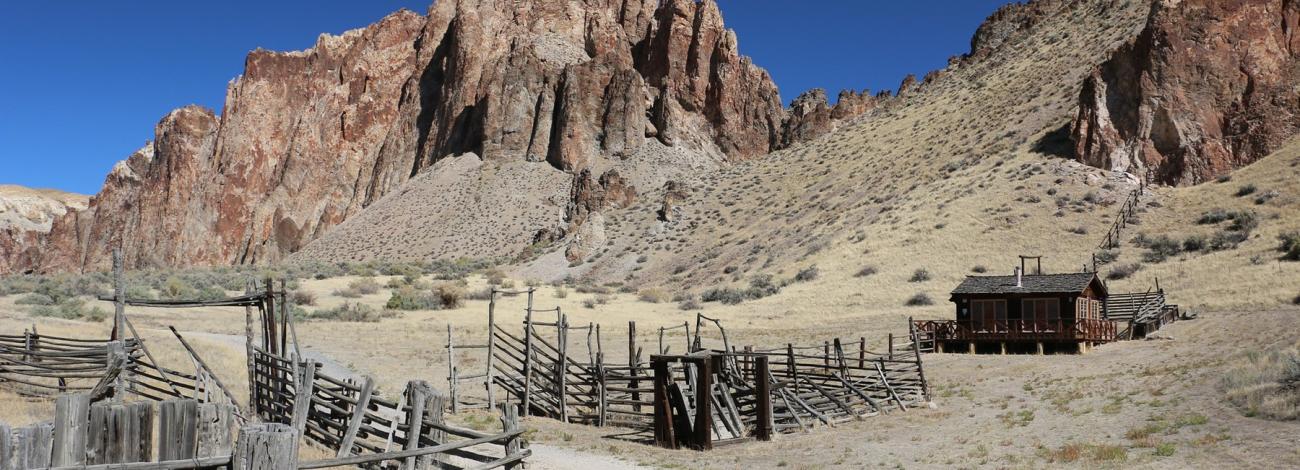
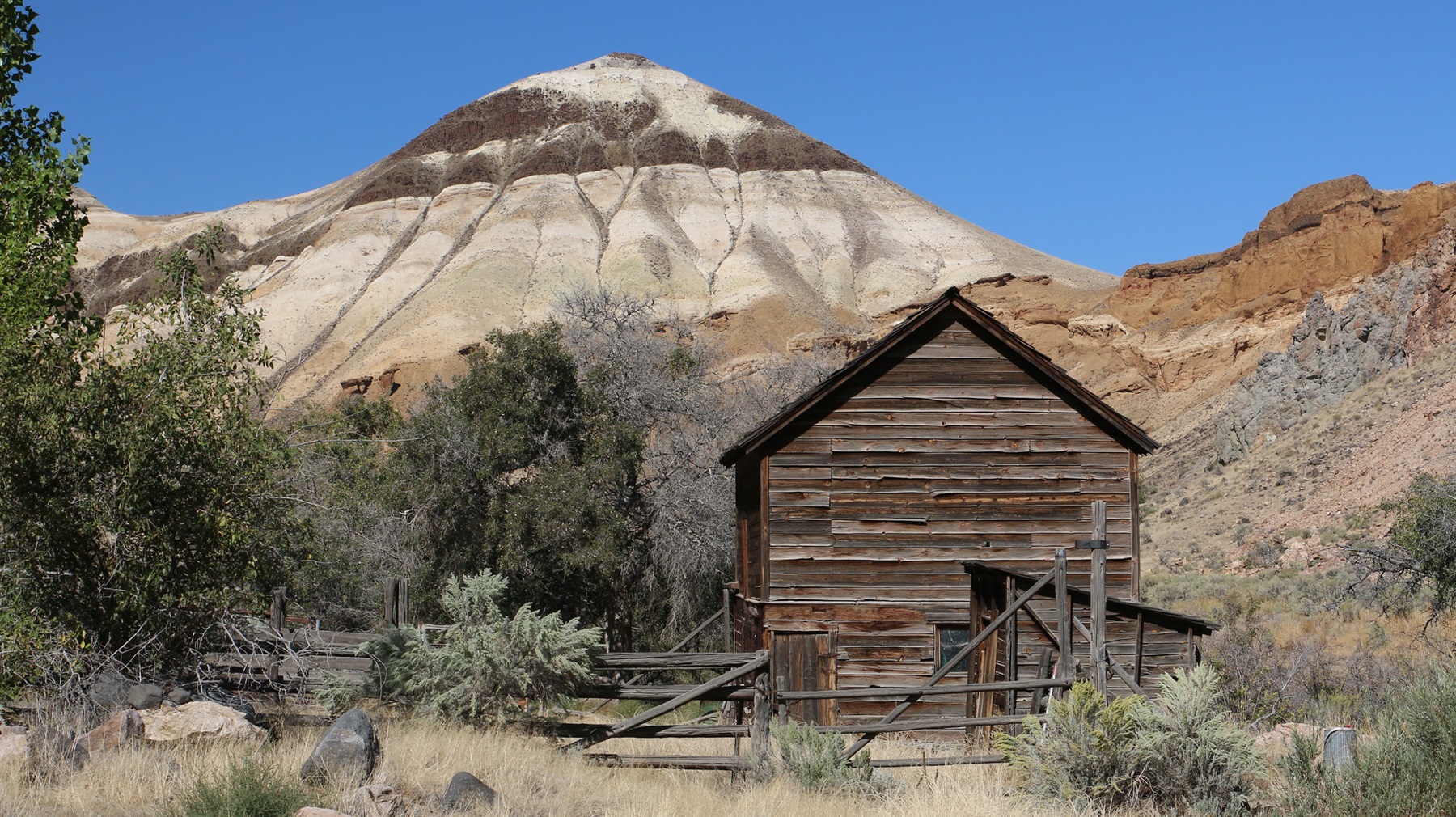
Birch Creek is an early-1900s ranch site on the banks of the Wild and Scenic Owyhee River, now managed by the Bureau of Land Management. It was homesteaded and worked as a cattle and Basque sheep operation in the era when this canyon country was settled by hard, self-reliant people who built what they needed from the stone and timber around them. The site is listed on the National Register of Historic Places, and several of its original structures still stand — a testament to how dry, remote, and undisturbed this corner of Oregon remains.
What strikes most visitors first isn't the history, though — it's the setting. The ranch sits in a pocket of green at the foot of dramatic rock formations, with the river curling past and canyon walls rising in bands of cream, rust, and gold. It feels like a place that shouldn't exist this far out.
Why it's worth the trip
Birch Creek rewards a specific kind of traveler — the one who'd rather have a place to themselves than share a paved overlook with a crowd. Here's what draws people down that long dirt road:
- The history you can walk up to. Unlike a museum, the ranch buildings sit in the open landscape exactly where they were built. You can stand where ranchers stood and look at the same canyon walls they did.
- The Wild and Scenic Owyhee River. This stretch of the Owyhee is federally protected for its remoteness and beauty. It's a destination for rafters, anglers, and anyone who wants to sit beside genuinely wild water.
- The geology. The canyon walls here are a photographer's dream — layered volcanic rock in warm desert colors, spires and rims catching the early and late light.
- The solitude. The road keeps the crowds away. On many days, you'll have the place to yourself.
How to get to Birch Creek
This is the part to take seriously, because the drive is real. Birch Creek is reached via unpaved roads off the Jordan Valley area, and the final approach is a long, rough, unmaintained route that typically requires a high-clearance vehicle, and 4-wheel-drive is strongly recommended — especially if there's been any rain. This is not a trip for a low passenger car or a quick detour.
A few honest notes before you go:
- Check conditions first. Desert roads change with weather. Rain turns sections to mud, and the route can become impassable. Ask locally and check with the BLM before committing.
- Carry the essentials. There's no cell service, no gas, no water, and no help out there. Bring a full tank, plenty of water, a spare tire, food, and tell someone your plans.
- Allow a full day. Between the distance, the slow unpaved miles, and the time you'll want to actually spend at the ranch and river, this is a full-day outing — not a couple of hours.
- Leave it as you found it. The structures are historic and fragile. Pack out everything, don't disturb the buildings, and respect that this is a protected site.
Birch Creek at a glance
- Location
- Owyhee canyonlands, Malheur County, southeastern Oregon
- Managed by
- Bureau of Land Management (BLM)
- Access
- Unpaved roads from the Jordan Valley area; high-clearance / 4WD recommended
- Best season
- Late spring through fall (avoid wet roads)
- Cell service
- None — come prepared and self-sufficient
- Good for
- History, photography, fishing, rafting, solitude
- Cost
- Free to visit (public land)
When to go
The sweet spot is late spring through fall, when the roads are dry and the days are long. Summer in the Owyhee is hot and exposed — start early, carry shade and water. Spring brings green to the canyon bottoms and wildflowers; fall brings golden cottonwoods and cooler driving. Winter and wet shoulder-season conditions can make the road dangerous or impassable, so it's best avoided unless you really know the area and the forecast.
See it before you go
We made a short film about the drive in and the oasis at the end of it — the best 30 seconds of "should I make this trip?" you can spend:
Make Birch Creek part of a bigger trip
Birch Creek isn't the only hidden gem out here. The Owyhee canyonlands are dense with them — Leslie Gulch and its honeycombed volcanic spires, the black lava flows of Jordan Craters, the ghost town of Silver City, and the sunset-gold stretches of the Owyhee River itself. Plan a few days and string several together; each one is its own world.
Your basecamp for the Owyhees
Birch Creek is a long way from anywhere — which is exactly why you want a comfortable place to come back to. Sunny Ridge RV Park is your gateway to the Owyhee canyonlands, near Jordan Valley, Oregon.
Book Your Stay