
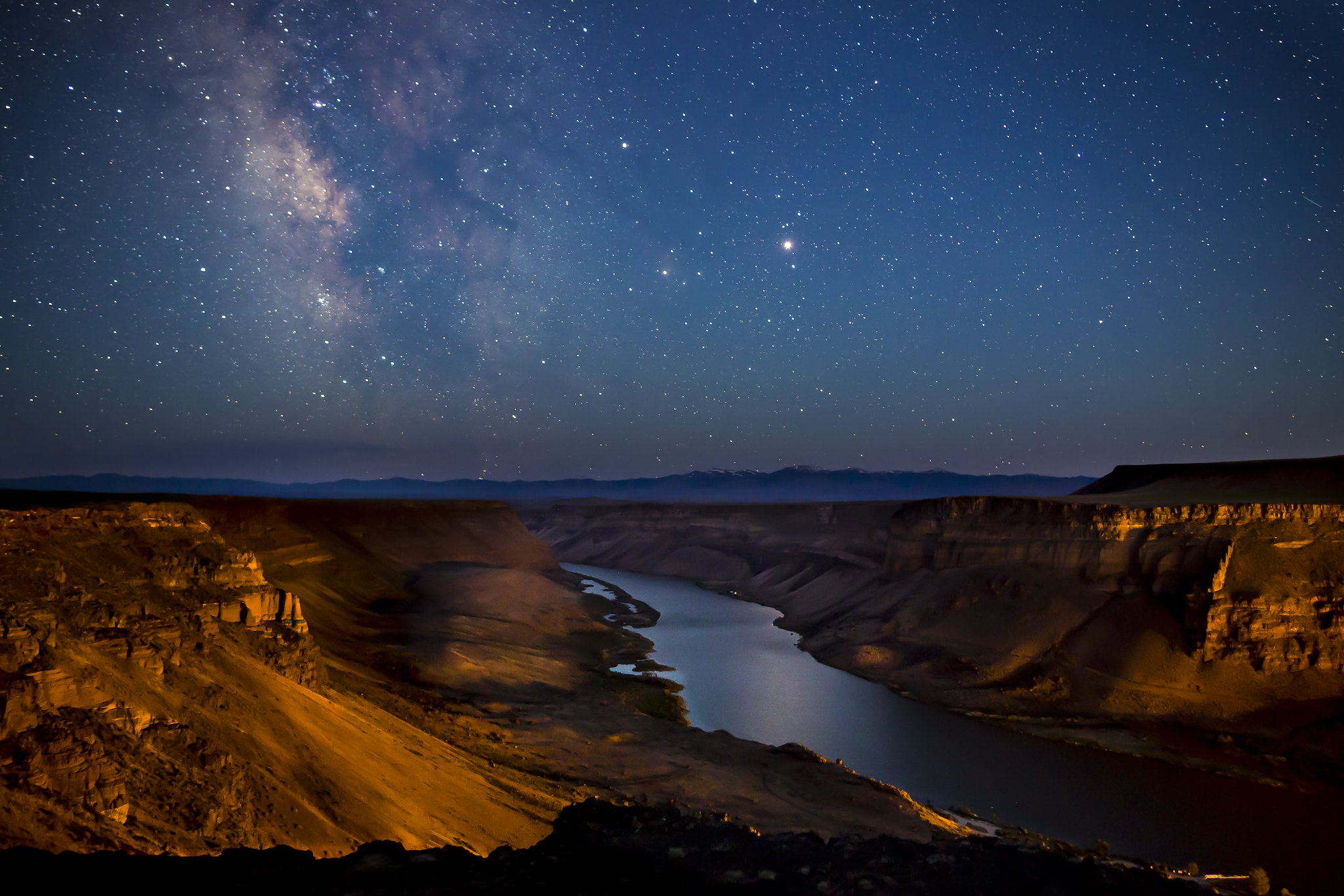
Most of us have never really seen the night sky. Light pollution washes it out for roughly four out of five Americans. Out here in the Owyhee country, that's not the case — when the sun drops behind the rimrock and the moon stays down, the sky fills with more stars than seem possible, and the Milky Way stretches horizon to horizon.
The high desert of southeastern Oregon holds some of the darkest skies left in the contiguous United States. This guide explains why the skies here are so good, what you can actually see, the best times to look up, and how to make a night under the stars part of your trip.
Why the skies here are so dark
Three things come together in the Owyhee to make near-perfect stargazing conditions. First, there's almost no one here — Malheur County is vast and sparsely populated, so there are very few towns, streetlights, or glowing horizons to wash out the stars. Second, the high desert air is dry and clear, which means steadier, more transparent skies than you'll find in humid or hazy regions. And third, the elevation and wide-open terrain give you a clean, unobstructed view from horizon to horizon, with few trees and no city glow in the way.
The region sits within what researchers have identified as the largest contiguous area of pristine dark sky in the lower 48 states — a distinction that's drawing stargazers and astrophotographers from across the country.
On the edge of the Oregon Outback Dark Sky Sanctuary
In March 2024, a 2.5-million-acre stretch of Lake County, Oregon — to our west — was certified by DarkSky International as the Oregon Outback International Dark Sky Sanctuary, the largest such sanctuary in the world. That was only the first phase. The plan is to expand the sanctuary eastward into Harney and Malheur counties, eventually protecting more than 11.4 million acres of night sky.
Sunny Ridge sits in Malheur County, within that planned expansion and squarely inside the same vast, dark high-desert region the sanctuary was created to protect. In other words: you don't have to drive into a designated sanctuary to find world-class darkness — out here, you're already in it.
What you can see
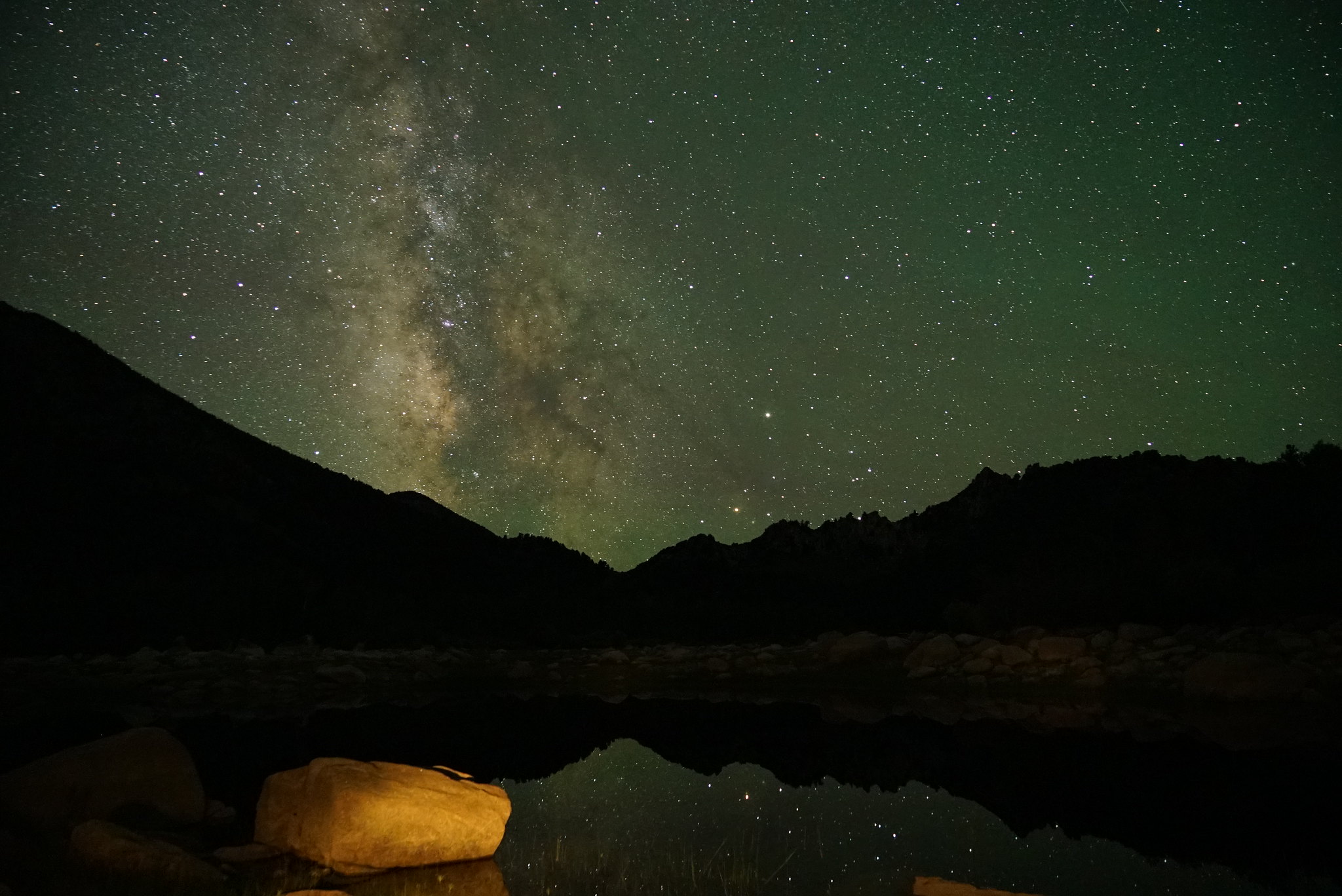
You don't need a telescope to be floored out here — the naked-eye sky is the main event. On a clear, dark night you can expect:
- The Milky Way. From spring through fall, the bright galactic core climbs into the southern sky, showing dust lanes and star clouds that are invisible from any city.
- Meteor showers. Dark skies make annual showers spectacular — the Perseids in August and the Geminids in December are the big ones, but you'll catch stray "shooting stars" on almost any clear night.
- Planets. Venus, Jupiter, Saturn, and Mars are easy naked-eye targets, and a pair of binoculars will reveal Jupiter's moons.
- Satellites and the ISS. Watch long enough and you'll see points of light sliding steadily across the sky.
- Deep-sky objects. With binoculars or a small scope, star clusters, the Andromeda Galaxy, and nebulae come within reach.
When to go
The single biggest factor is the moon. Plan your stargazing for the nights around the new moon, when the sky is darkest; a bright full moon will wash out all but the brightest stars. After that, it's about clear skies — the high desert is often cloudless, but always check the forecast.
For the Milky Way's bright core, aim for late spring through early fall, when it rises high in the night sky. Summer offers warm, comfortable nights and the best Milky Way views; fall and winter trade colder temperatures for crisp, exceptionally transparent skies and earlier darkness. Whatever the season, give your eyes a full 20–30 minutes to adjust to the dark — that's when the faint detail emerges.
Stargazing in the Owyhee at a glance
- Location
- High desert of the Owyhee canyonlands, Malheur County, southeastern Oregon
- Dark sky status
- Among the darkest skies in the lower 48; within the planned expansion of the Oregon Outback International Dark Sky Sanctuary
- Best time
- Nights around the new moon; late spring–early fall for the Milky Way core
- What to bring
- Red flashlight, warm layers, reclining chair or blanket, binoculars, a star app
- Big meteor showers
- Perseids (mid-August), Geminids (mid-December)
- Eye adjustment
- Allow 20–30 minutes of darkness for full night vision
- Cost
- Free — just step outside
Tips for a great night under the stars
- Use a red light. White light ruins your night vision for everyone; a red flashlight (or red mode on your phone) lets you see without resetting your eyes.
- Dress warmer than you think. High-desert nights cool off fast, even after hot days. Bring layers, a hat, and something to sit or lie on.
- Download a star app. Free apps like Stellarium help you find planets, constellations, and the Milky Way's position for your date.
- Time the Milky Way. Check when the galactic core rises for your night — apps and online calculators make this easy.
- Be patient. The longer you're out and the more your eyes adjust, the more the sky reveals.
- For photographers: a tripod, a wide fast lens, and exposures of 15–25 seconds at high ISO will capture the Milky Way beautifully out here.
Make the most of a dark-sky trip
The beauty of stargazing in the Owyhee is that the days are as good as the nights. Spend daylight exploring the canyonlands — the spires of Leslie Gulch, the clay cliffs of the Pillars of Rome, the lava fields of Jordan Craters, or a day on Owyhee Reservoir — then come back, let the sky go dark, and look up. A new-moon weekend built around clear skies and canyon day-trips is about as good as the high desert gets.
Your basecamp under the stars
Stargazing this good only happens where the night still gets truly dark — and that means staying somewhere remote. Sunny Ridge RV Park is your gateway to the Owyhees and its dark skies, near Jordan Valley, Oregon. Settle in, and let the Milky Way come out.
Book Your Stay